By the Learn Kalmausam editorial team. Reviewed and updated on August 8, 2026.
This article is educational and independent. It is not medical advice, a diagnosis, or a treatment recommendation, and it is not a substitute for care from a qualified professional. Only a licensed clinician who has evaluated you can advise on your situation. Treatment approaches and availability vary by provider and by state.
If you are in crisis or thinking about harming yourself, help is available right now, free and confidential. Call or text 988 to reach the 988 Suicide & Crisis Lifeline, or chat at 988lifeline.org. You can also text HOME to 741741 to reach the Crisis Text Line. For mental health or substance use treatment referrals, SAMHSA’s National Helpline is 1-800-662-4357. If someone is in immediate danger, call 911.
Someone mentioned TMS therapy to you, probably a psychiatrist, probably after a conversation about medications that did not do enough. You heard “magnetic stimulation of the brain” and something tightened, because the phrase sounds like it belongs in a documentary about the 1950s rather than in a medical suite on a Tuesday morning.
Here is the plain version. You sit in a padded reclining chair, fully awake, in your street clothes. A technician positions a cushioned coil against the left side of your head. The machine clicks rapidly and you feel a tapping on your scalp. That runs for anywhere from three minutes to about forty, depending on the protocol. Then you stand up and drive to work.
The strange part is not the procedure. It is the calendar. Five days a week, for something like six weeks, at the same time every morning. That commitment is what people underestimate.
What TMS therapy actually is
TMS stands for transcranial magnetic stimulation. “Transcranial” means across the skull. Nothing is implanted, nothing is injected, and no part of the device goes inside you.
An electromagnetic coil sits against the scalp and delivers brief, focused magnetic pulses. Those pulses pass through the skull and induce a small electrical current in the brain tissue just underneath, which makes nerve cells in a targeted region fire. When the same region is stimulated repeatedly across many sessions, activity in that area and in the circuits connected to it appears to shift. That is the mechanism clinicians are aiming at. The National Institute of Mental Health classifies it among the brain stimulation therapies and describes it as noninvasive, performed while a person is awake and alert.
The target for depression is usually a region on the left side toward the front of the brain, the dorsolateral prefrontal cortex, which is involved in mood regulation. Depth of effect is limited. Standard coils reach a couple of centimeters in, enough for surface cortex and not much beyond.
You will also see the abbreviation rTMS. The r stands for repetitive, meaning pulses delivered in trains rather than one at a time. In practice almost all TMS used for depression is repetitive.
The U.S. Food and Drug Administration has cleared TMS devices for specific psychiatric uses since 2008, starting with major depressive disorder in adults who did not respond adequately to antidepressant medication. Cleared means marketing is permitted for a defined use in a defined population. It is not a statement that the treatment works for everyone.
The first appointment is different from all the others
Your first visit is not a treatment session. It is a mapping session, commonly 45 to 60 minutes against the 20 or 30 a routine session runs door to door.
Two things get established. The first is where the coil goes. The clinician measures your head using anatomical landmarks, sometimes with imaging-based navigation, then records the coordinates so the same spot gets hit every day afterward.
The second is how strong the pulses need to be, and the method surprises people. The coil is placed over the part of the brain that controls hand movement, and pulses are delivered at gradually increasing intensity until your thumb or fingers twitch on their own. That lowest strength producing a visible twitch is called the motor threshold. Your treatment intensity is then set as a percentage of it, often around 120 percent.
Watching your own hand move without deciding to move it is genuinely odd. It is also the most sensible calibration available, because it uses your own physiology rather than an average. Skull thickness varies. The threshold gets rechecked periodically, since it can drift.
| First visit (mapping) | Every visit after | |
|---|---|---|
| Typical length | 45 to 60 minutes | 20 to 40 minutes in the building; the stimulation itself is shorter |
| Main purpose | Locate the target, find the motor threshold, set the intensity | Deliver the prescribed stimulation at the recorded settings |
| Who is present | Usually the prescribing physician plus a trained technician | Usually a technician, with a physician available |
| What you feel | Tapping, plus involuntary twitching in the hand during threshold testing | Tapping on the scalp, clicking noise, nothing in the hand |
| Afterward | Drive yourself home; no recovery period | Drive yourself home; no recovery period |
Inside the room on an ordinary day
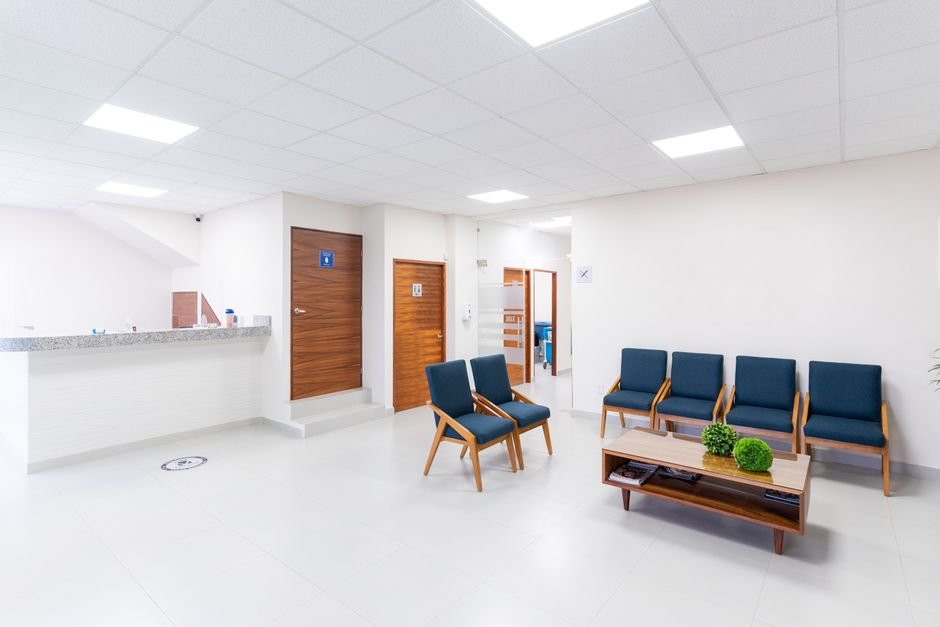
Check in at a front desk. Someone calls your name. The treatment room is small, with a chair that looks like a dentist’s chair crossed with a recliner and an adjustable arm holding the coil.
You get earplugs, and they are not optional. The clicking is loud enough to matter over hundreds of sessions, so the technician will check that yours are seated properly before starting.
Then the coil comes down and locks into the recorded position. The technician confirms your settings, asks how the last session went, and starts the machine. Pulses arrive in bursts with pauses between them: a few seconds of rapid clicking, then a rest of ten to thirty seconds, repeated for the length of the session.
What you do during that time is up to the clinic. Many people listen to music or a podcast, some talk with the technician between bursts. Reading is awkward because your head needs to stay still. There is no grogginess afterward.
Session length depends entirely on the protocol.
| Pattern | Roughly how long the stimulation runs | Typical schedule | Notes |
|---|---|---|---|
| Conventional high-frequency rTMS | About 19 to 40 minutes | Five days a week for four to six weeks, plus a taper | The longest-established pattern and the one most clinics run |
| Theta burst stimulation | Around three minutes in the shortest form | Five days a week over a similar number of weeks | Compresses the session; the daily-visit commitment does not change |
| Accelerated schedules | Multiple short sessions in one day, spaced by breaks | Several sessions daily across a much smaller number of days | Newer, less widely available, evidence base still developing |
A standard course generally lands around 30 to 36 sessions, sometimes with a taper at the end where visits drop to a few per week. Ask what the plan is at your clinic, because the number is not universal.
What it feels like, honestly
Two sensations dominate. The tapping, mechanical and localized and unmistakably on the outside of your head rather than inside it, and the noise, which earplugs muffle substantially.
The tapping is uncomfortable for many people in the first week and much less so afterward. Scalp discomfort is the most commonly discussed side effect. Technicians can adjust coil angle or ramp intensity up over the first several sessions rather than starting at full strength, so telling them it hurts is useful information rather than complaining.
Some twitching in the face or jaw is normal during stimulation, because facial nerves run near the target area. The eye on that side may blink or the cheek may pull. It stops the instant the pulse train stops.
Headache after a session is the other commonly reported effect, most often in the first week or two, and it is generally described as mild. Some people notice nothing at all past the first few days.
The rare risk clinicians screen for is a seizure. It is uncommon with modern protocols, and it is the reason for the screening questions you get before starting: seizure history, epilepsy in the family, head injury, and anything else that lowers seizure threshold, including certain medications and heavy alcohol use. Answer them accurately. Staff are trained to respond, and the protocols exist because the risk, though small, is known rather than hidden.
There is also an absolute screening question about metal. Non-removable magnetic-sensitive metal in or near the head generally rules TMS out. Dental fillings and most dental work are not a problem. Bring the details of any implant to the screening appointment rather than guessing.
Who TMS therapy is typically considered for
The usual path is not a first stop. TMS therapy is generally discussed after antidepressant medication has been tried and has not produced enough improvement, often after more than one adequate trial at an adequate duration.
Clinicians use “treatment-resistant depression” for that pattern, a description of what has been tried rather than a statement about how severe someone’s depression is. Our explainer on treatment resistant depression covers what counts as an adequate trial.
Beyond depression, FDA clearances exist for certain other adult uses, including obsessive-compulsive disorder with a different coil and protocol, and smoking cessation. Clearance for one indication does not transfer to another. Plenty of other conditions get discussed in connection with TMS in research settings and online, and most of those uses are not cleared.
Factors that commonly come up when a clinician is weighing whether to raise it:
- Medication trials that produced partial improvement, or none, or side effects severe enough to stop treatment
- A preference to avoid or minimize systemic medication effects, since TMS does not act on the whole body the way an oral medication does
- Whether the person can realistically attend daily appointments for several weeks, which is a practical screen as much as a clinical one
- Absence of the metal implants and seizure-risk factors covered in screening
- Whether therapy has been part of the picture, since TMS is generally added to ongoing care rather than replacing it
Age matters too. The clearances are for adults, and use in adolescents is narrower and newer. A clinician who evaluates you is the only one who can say whether any of this applies.
What the research generally shows, and where it thins out
Reasonably strong evidence exists that repetitive TMS reduces depressive symptoms in adults who have not responded to antidepressant medication. Multiple randomized trials comparing active stimulation against a sham condition, where the coil is positioned but effective stimulation is not delivered, have found a difference favoring active treatment. That is why the FDA cleared it and why professional bodies include it in treatment discussions for this population.
Now the honest qualifications, because TMS marketing tends to skip these.
- Not everyone improves. Some people get substantial benefit, some partial, some little or none. Any clinic quoting a single high success rate without explaining what it counted as success is selling rather than informing.
- Response and remission are different measurements. Response usually means symptoms dropped by half on a rating scale. Remission means they fell below a threshold considered close to well. Numbers for the first are always higher, and the two get blurred constantly in advertising.
- Durability is the open question. Benefit can fade over months, and maintenance strategies rest on an evidence base thinner than the acute-treatment evidence.
- Trial populations are not everyone. People with active substance use disorders, psychosis, or high acute risk are frequently excluded, so conclusions transfer to those situations less confidently.
- Protocol comparisons are still settling. Theta burst has been found broadly comparable to conventional rTMS in head-to-head work, a large practical advantage given the time difference, but accelerated schedules are newer and less complete.
What that adds up to: a real treatment with real evidence behind it for a specific population, not a reset button.
TMS and ECT are not the same thing, and the confusion is understandable
Almost everyone who hears “magnetic stimulation of the brain” thinks of electroconvulsive therapy, and the fear attached to ECT in popular culture gets transferred onto TMS by default. They are genuinely different procedures with different risk profiles.
ECT involves general anesthesia and a muscle relaxant, and it deliberately induces a brief, controlled seizure under medical supervision. It happens in a hospital or procedural setting, typically two or three times a week, and requires someone to drive you home. Memory effects around the period of treatment are a documented consideration. It also has a strong evidence base and remains one of the most effective options for severe depression, which is why it is still used despite its reputation.
TMS involves no anesthesia, no induced seizure, no recovery room, and no memory effect of that kind.
| TMS (transcranial magnetic stimulation) | ECT (electroconvulsive therapy) | |
|---|---|---|
| Anesthesia | None | General anesthesia plus a muscle relaxant |
| Seizure | Not intended; a rare risk that screening aims to reduce | Deliberately induced and medically controlled |
| Setting | Outpatient office or clinic room | Hospital or procedural suite with anesthesia staff |
| Schedule | Usually five days a week for several weeks | Usually two to three times a week for a shorter run |
| Driving yourself | Yes | No; someone must take you home |
| Memory effects | Not a characteristic effect | A recognized consideration, discussed in consent |
| Commonly considered when | Medication trials have not worked well enough and the person can attend daily | Depression is severe, urgent, or has not responded to other options including TMS |
One is not a milder version of the other. They sit at different points in the sequence. Our overview of electroconvulsive therapy goes into what that process involves.
What TMS therapy does not do
Misconceptions cluster in predictable places, and clearing them out early saves disappointment.
- It does not work instantly. Change, when it happens, builds gradually across the course, often becoming noticeable in the third or fourth week. Nobody walks out of session two feeling different, and a clinic implying otherwise is overselling.
- It does not replace therapy. TMS is generally layered onto existing care, and most people continue whatever psychotherapy and medication their prescriber has them on.
- It is not painless for everyone. The first week can be genuinely uncomfortable. Well tolerated is accurate and is not the same as saying you will not feel it.
- It does not require stopping your medication. Those decisions belong to your prescriber and are made separately. Never change anything on your own because a treatment was added.
- It is not brain surgery, and nothing is implanted. The device sits against the outside of your head and is removed at the end of the session.
- It does not carry a diagnosis with it. Being offered TMS says something about what has already been tried, not about how serious or how hopeless your situation is.
It is also not a cure, and it is not framed that way by the agencies that evaluate it. Symptoms improving substantially for a period of months is the realistic target, with follow-up care planned around the possibility that they return.
The daily-visit problem nobody plans for
Thirty to thirty-six weekday appointments over six weeks. Say the drive is twenty minutes each way and the visit is thirty. That is roughly an hour and ten minutes gone from every weekday morning for a month and a half.
People agree to this in the abstract and run into it in week two. The failure mode is a missed Thursday, then a missed Monday, then a course that drifts out of shape, because consistency across consecutive sessions is part of how the treatment is supposed to work.
Practical things that decide whether it is feasible:
- Whether you can hold the same slot every day, since clinics run tight schedules and a floating appointment time is much harder to sustain
- How far the clinic is, in traffic, at the hour you would actually be going
- Whether work can absorb a recurring early-morning or late-afternoon absence for six weeks, and whether you want to explain why
- Childcare, school runs, and anything else pinned to the same hours
- What happens when you get sick, travel, or hit a holiday, and how the clinic handles a missed session
- Whether you have a fallback for getting there on a day the car does not start
Ask about the makeup policy specifically. Some clinics add a session to the end, some hold a weekend slot, some extend the course. Knowing before you start prevents a small disruption from becoming a decision point.
Coverage, prior authorization, and what an insurer requires before approving are all outside what this site covers. Our sister site lawyers.kalmausam.in handles those.
Questions worth asking a provider
Take these to the consultation and write the answers down, because that appointment tends to include a lot of new information at once.
- Which protocol are you proposing for me, how long is each session, and how many sessions total?
- Who is in the room during treatment, and what are their qualifications? Is a physician on site?
- How is the target located, and will the motor threshold be rechecked during the course?
- What are you measuring to decide whether this is working, and how often do you measure it?
- At what point would you conclude it is not working for me?
- What is your policy on missed sessions, and can I hold the same daily time slot?
- What happens after the course ends? Do you do a taper, and what is the plan for maintenance?
- If symptoms return in six months, what are the options at that point?
- What screening do you do for seizure risk and implanted metal, and is there anything in my history that concerns you?
- Should anything change about my current medication or therapy while I do this, and who decides that?
- Who do I contact if I have a headache or scalp pain that is not settling?
A clinician who welcomes the fifth question on that list is worth more than one with a polished answer to the first. Willingness to define failure in advance is a decent proxy for honesty.
Where this sits alongside other care
Think of TMS as one option inside a sequence rather than a separate track. Most people arrive having already done outpatient therapy and one or two medication trials, and continue both while receiving it.
If your clinician raised TMS because medication has not done enough, the medication conversation usually continues in parallel, and our explainer on how antidepressants work covers the timelines that make an “adequate trial” adequate. If the recommendation is instead for more structured support during the day, partial hospitalization programs and intensive outpatient programs sit between weekly appointments and inpatient care, and they answer a different question than TMS does.
Our walkthrough of a psychiatric evaluation covers what gets asked in the appointment that leads to any of this.
Frequently Asked Questions
Does TMS therapy hurt?
Most people describe a tapping sensation on the scalp that is uncomfortable rather than painful and eases over the first week or two. Scalp discomfort and mild headache are the most commonly discussed side effects. Technicians can adjust the coil angle or ramp intensity up gradually.
Are you awake during TMS therapy?
Yes. No anesthesia, no sedation. You sit in a reclining chair in ordinary clothes wearing earplugs, and you can talk with the technician between pulse trains. You drive yourself home afterward.
How long does a TMS session take?
It depends on the protocol. Conventional high-frequency stimulation commonly runs about 19 to 40 minutes, while the shortest theta burst form takes around three minutes. Budget 20 to 40 minutes in the building either way.
How many TMS sessions are needed?
A standard course is generally around 30 to 36 sessions, five days a week for roughly four to six weeks, sometimes followed by a taper. The exact number varies by protocol and clinic.
How is TMS different from ECT?
TMS uses magnetic pulses on an awake person and does not induce a seizure. ECT is performed under general anesthesia with a muscle relaxant, deliberately induces a brief controlled seizure, requires a ride home, and carries recognized memory effects.
Can TMS cause a seizure?
A seizure is a rare risk, which is why clinics screen for seizure history, head injury, and other factors that lower seizure threshold. Modern safety parameters were designed around this risk, and staff are trained to respond.
Who is TMS therapy usually considered for?
Generally for adults with depression that has not responded adequately to antidepressant medication, often after more than one adequate trial. FDA clearances also cover certain other adult uses with different protocols. Only a clinician who has evaluated you can say whether it fits.
Do I have to stop my antidepressant to have TMS?
Not as a rule. TMS is typically added to existing treatment, and most people continue medication and therapy during the course. Any change is a decision for your prescriber.
How soon would I notice a difference?
Improvement usually builds gradually rather than arriving suddenly, and is often first noticed around the third or fourth week. Some people notice change after the course finishes. Nobody should expect a difference after one or two sessions.
Does the benefit last?
For some people it holds for months; for others symptoms return, and durability is the weaker part of the evidence base. Maintenance approaches such as booster sessions or a repeat course are used in practice.
Does TMS work for anxiety, PTSD, or other conditions?
FDA clearances are specific and cover defined uses in defined populations. Other conditions are studied, but clearance for one indication does not extend to another, and evidence outside the cleared uses varies in strength.
Final Thoughts
If you take one thing into your consultation, make it the calendar rather than the science. The procedure is milder than it sounds. Six weeks of weekday mornings is a real thing to arrange.
So before the appointment, open a calendar and block a realistic slot, five weekdays a week, for six weeks. Look at what it collides with. Bring that to the conversation along with the questions above.
Sources
- National Institute of Mental Health, Brain Stimulation Therapies
- National Institute of Mental Health, Depression
- U.S. Food and Drug Administration, Neurological Devices
- MedlinePlus, U.S. National Library of Medicine, Depression
- American Psychiatric Association, Patients and Families resources
This article is for general informational and educational purposes only. It does not constitute medical advice, a diagnosis, a treatment recommendation, or a substitute for evaluation and care by a qualified health professional. Descriptions of conditions, therapies, procedures, and medications are general and educational; individual experience, suitability, risks, and outcomes vary substantially, and treatment practices change over time. This site is independently operated. It is not a healthcare provider, a treatment facility, a licensed clinician, or a government agency, and it cannot evaluate, diagnose, or treat anyone. Never start, stop, or change any medication or treatment based on anything you read here. Always consult a licensed clinician about your own care, and if you are in crisis, use the free resources listed above.